Agency Revenue Leaks Hidden in Contract Renewals
Stop agency revenue leaks with contract renewal tracking and contract expiry reminders that help marketing agencies cut churn and protect retainers.
Agency revenue leaks rarely start with a dramatic loss. More often, they begin with one missed renewal date, one quiet inbox thread, and one client who simply disappears when the retainer ends. These small oversights lead to significant cumulative revenue leakage.
That is why agency revenue leaks matter so much. They hit cash flow, make forecasts shaky, push churn for marketing agencies higher than it should be, and directly erode profit margins before leadership even notices. For client retention for marketing agencies, the real problem is often not service quality, but timing.
Key Takeaways
- Agency revenue leaks often start with missed contract renewals, leading to quiet churn that erodes cash flow, profit margins, and forecasts before anyone notices.
- Dispersed tracking across spreadsheets, CRMs, and calendars hides expiry dates; centralize contracts with clear ownership and integration into workflows to protect recurring revenue.
- Automated reminders at 30, 14, and 7 days before expiry enable calm reviews, address scope creep, and prevent pushy sales while ensuring timely action.
- Replacing lost clients costs far more than retaining them—focus on renewal systems first to reduce avoidable churn and support better capacity planning.
- Simple tools unify renewal tracking, status updates, and alerts, turning small oversights into predictable revenue streams.
The True Cost of Agency Revenue Leaks
Most agencies blame lost revenue on poor results or weak sales. Those things matter, but churn for marketing agencies also comes from plain old neglect, including scope creep when expectations and contracts are not aligned, billing errors, and unbilled work. A client can like the work and still leave if nobody reaches out before the contract expires.
DigitalMarketer's marketing agency churn report breaks churn into clear causes, including service fit, account care, and contract issues. That's useful, because it shows how much loss sits outside the creative work itself.
When a renewal slips, the damage goes beyond one account and hits gross margin hard. The team may keep working as if the client is still safe, while client acquisition cost to replace them looms large. Meanwhile, revenue gaps grow amid overhead bloat from fixed costs that do not budge, and the next month starts with less than planned.

An expired contract can hurt revenue even when the client still likes your work.
That is the part many teams miss. The loss is quiet, so it feels smaller than it is. Then it repeats.
Why Renewal Dates Slip Through
Renewal dates usually live in too many places. One person keeps a spreadsheet, another stores notes in the CRM, and a third trusts calendar reminders that never get checked. This dispersed approach signals a weak operational structure.
That is where contract leakage hides in plain sight. Teams ask how to reduce churn, but they often start with reports instead of dates. If nobody owns the expiry date, nobody owns the renewal. Knowing when contracts end is vital for accurate revenue recognition.
It gets worse when staff changes or accounts go quiet. A manager leaves, the handoff gets rushed, and a retainer rolls off without a real conversation. The client may not even know they were one email away from continuing. Proper resource tracking ensures you always know who owns each client.
A simple system fixes most of this. The goal is one place for every contract, one owner for every renewal, and one clear next step that bridges service delivery to your sales system.
If you want to see how that looks in practice, the contract renewal tracking features page shows the kind of setup that keeps dates visible.
What Good Contract Renewal Tracking Looks Like
Good contract renewal tracking is not just a calendar with more alerts. It integrates with standard project management workflows and gives every client a profile with the contract end date, current status, account owner, and revenue at risk. This setup protects your recurring revenue and ensures predictable revenue streams. That makes the next move obvious, whether your agency uses value-based pricing or hourly billing models.
Retainer management software helps because it keeps the whole picture together. Instead of chasing details across email threads, your team sees which accounts need action this week and which ones are safe for now. Knowing the renewal status also helps in calculating future utilization rates. That matters when you manage many recurring clients at once.
A healthy tracking setup should also make reviews easier. You want to know who renewed on time, who needed a nudge, and which accounts took longer than expected. Over time, those patterns show where your process is weak.
Benchmarks from client retention statistics also make one thing clear, replacing clients costs far more than keeping them. So if you are searching for how to reduce client churn agency-wide, start with the systems that protect current revenue before you chase new business.
If budget is part of the decision, the pricing plans page helps you compare options without guessing what each tier includes.
Set Up Automated Contract Expiry Reminders
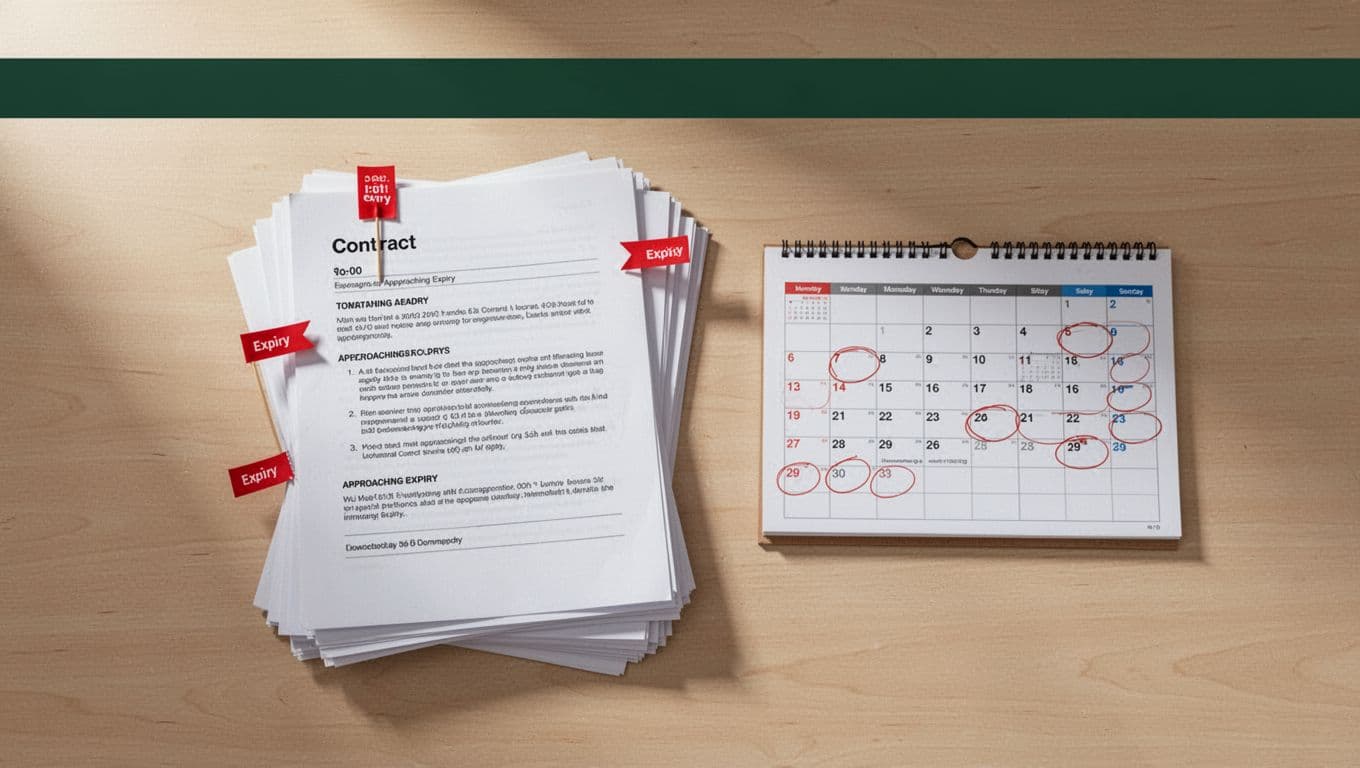
Contract expiry reminders work best when they go out before the client feels pressure. A 30-day note gives time for a calm review, the perfect opportunity to address any scope creep from the term and initiate the change order process if services need a pivot. A 14-day reminder keeps the account visible. A 7-day alert pushes the team to act.
This is also how to keep retainer clients without sounding pushy. You are not pestering people. You are protecting the work you already did.
Automation helps because it removes memory from the process and prevents unbillable hours for account managers stuck with manual tracking. As a form of modern subscription management, email reminders can go out on schedule, and Slack alerts can keep the team aligned. That means fewer last-minute surprises and fewer missed handoffs, especially for agencies using usage-based billing models.
If you worry about sending too many reminders, the renewal reminders FAQs covers the common questions agencies ask before they automate. Most concerns fade once the process feels organized and consistent.
Frequently Asked Questions
What causes most agency revenue leaks?
Agency revenue leaks stem from neglected contract renewals, scope creep, billing errors, and dispersed tracking across tools. Clients may love the work but leave if no one reaches out before expiry. Centralizing dates and assigning owners stops these quiet losses.
How do I set up effective contract renewal tracking?
Use a single system for every contract's end date, status, owner, and revenue at risk, integrated with project management. Assign clear next steps that link service delivery to sales. This setup reveals patterns in renewals and protects gross margins.
When should contract expiry reminders go out?
Send a 30-day reminder for calm reviews and scope adjustments, a 14-day note to keep accounts visible, and a 7-day alert to prompt action. Automation via email or Slack ensures consistency without manual effort. This prevents last-minute surprises and unbillable tracking time.
Why focus on renewals over new client acquisition?
Client retention benchmarks show replacing clients costs far more than keeping them, amid high acquisition expenses and fixed overhead. Protecting current revenue stabilizes forecasts and utilization rates. Start with renewal systems before chasing growth.
How does retainer management software help reduce churn?
It unifies profiles, alerts, and reviews in one place, eliminating scattered notes and inbox threads. Teams see at-risk accounts weekly and calculate future revenue accurately. This supports value-based or usage billing while minimizing bench time from losses.
Conclusion
The hidden loss in many agencies is not a giant mistake. It is a dozen small misses that add up, especially when renewals live in scattered notes and busy inboxes, underpricing risks surface during renewal audits, or late payments linger due to disjointed invoicing systems. Once you see the pattern, agency revenue leaks are easier to stop.
The fix is plain. Track every renewal date, set contract expiry reminders, and give someone ownership before the contract gets close to the edge. That is the clearest path to stronger retention, less avoidable churn, better capacity planning, routine financial check-ups, and keeping your team free from unnecessary bench time due to lost revenue.
If you want a simple place to start, Start Free and put every renewal date in one place before the next lapse costs you another client.