How to See Revenue at Risk Before It's Too Late
Spot revenue at risk before renewals slip, with contract renewal tracking, contract expiry reminders, and clear follow-up for agency churn.
Revenue at risk hides in plain sight. A client can look happy on Friday and still slip away next month because nobody tracked the renewal date.
That's why agencies need more than a gut feel. When contracts, reminders, and account notes live in separate places, warning signs arrive late. The fix starts with clearer renewal data and a tighter follow-up process.
Start with the contracts, not the guesswork
Revenue at risk is the money tied to accounts that could lapse soon. For agencies, that usually means retainers, contracts, and add-on work tied to one renewal date. If those dates sit in spreadsheets or inboxes, you only notice the problem after the client has drifted away.
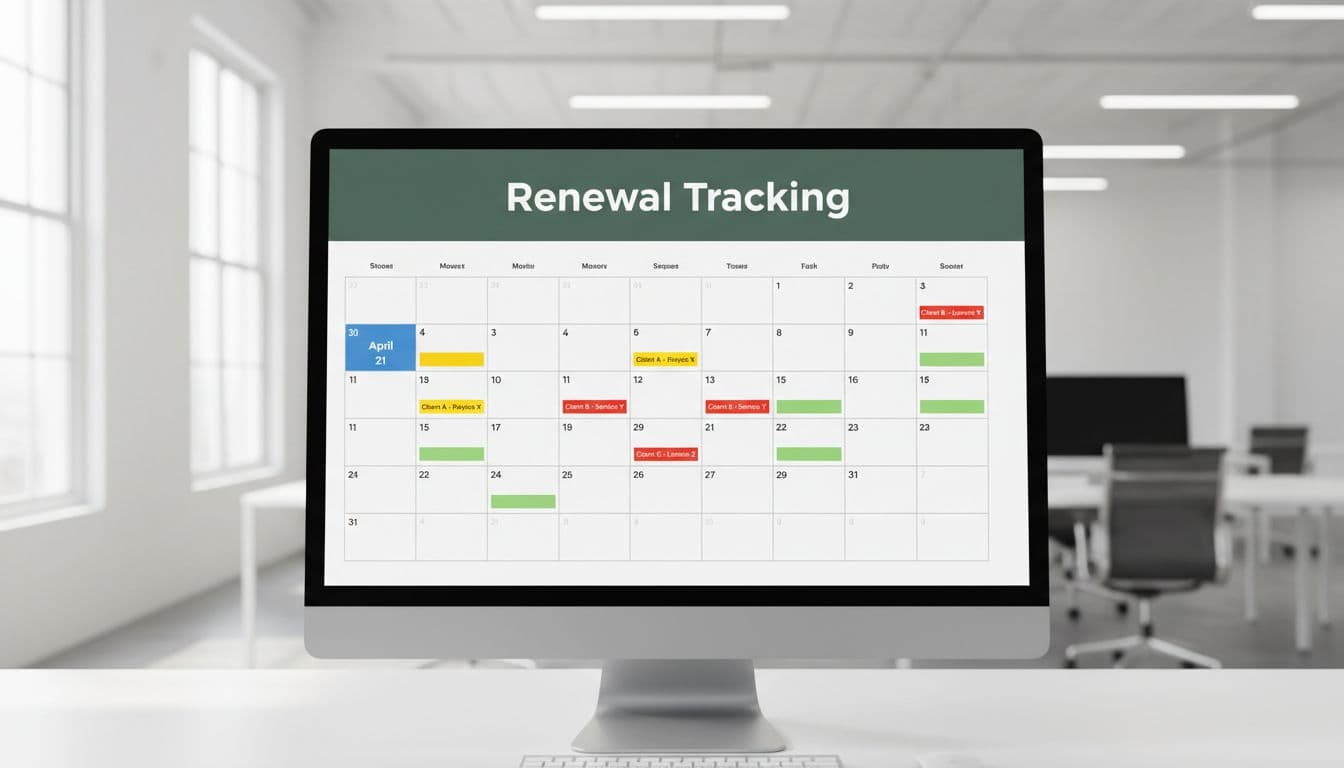
A single view changes that. With contract renewal tracking tools, you can see every end date, urgency level, and follow-up note in one place.
That matters because client retention for marketing agencies depends on timing. A client may like the work and still forget to renew if nobody reaches out with a clear next step. When the dashboard shows which accounts are close to expiry, you stop guessing and start prioritizing.

Read the signals before the client does
Churn for marketing agencies rarely starts with a formal complaint. It starts with slower replies, fewer meeting notes, or approval delays. Agency client churn can also show up when a contact stops forwarding updates or the client asks to revisit scope.
Teams often ask how to help churn drop, and the answer is early warning signs.
Useful signs include:
- Reporting gets skimmed instead of discussed.
- The main contact stops bringing decision makers.
- Invoices or approvals slip past their usual dates.
- The client starts asking for "just a pause" or a smaller scope.
Use those signs alongside benchmarks. Swydo's article on client churn KPIs gives agency owners a practical way to think about turnover and risk. For a broader audit framework, Growth Rocket's client churn prevention audit is a useful companion read. Together, they help you spot where a client is cooling off before the money is gone.
If a client gets quiet, the account has already started to change.
Turn renewal dates into action
Once you see the risk, the next step is action. The fastest answer to how to reduce client churn agency leaders face is to make renewal follow-up repeatable. Set contract expiry reminders at 30, 14, and 7 days. Give one person clear ownership. Use retainer management software so the reminders do not live in someone's memory or calendar alone.
Keep notes on renewal history and lapse reasons. If a client once pushed back because of budget, that detail should be in the file before the next conversation. If you are comparing agency retainer management costs, look for a tool that handles reminders, dashboards, and team access without extra admin work.
This is where how to keep retainer clients gets practical. You need the renewal date, the context, and the next step in the same workflow. Without that, a healthy account can still slip into avoidable churn.

Make retention part of the weekly review
Good renewal tracking works best when it becomes a weekly habit. Review the next 90 days every Monday, or at whatever cadence fits your team. Ask who needs a call, who needs a proposal, and who needs a clean handoff. That rhythm is a big part of how to keep retainer clients, because it catches risk while there is still time to repair it.
It also makes reporting easier. When the team can see every renewal in one place, it gets simpler to spot patterns, like certain service lines or account managers driving more slips than others. That is where better process beats more pressure.
If you need setup answers, the common renewal tracking questions page is a good place to start. For more retention habits and workflow ideas, the KeepClient blog has practical posts built for agencies. If you want to test the system now, Start Free and map the next 90 days before another renewal goes quiet.
Conclusion
Revenue at risk gets easier to manage when it stops hiding in email threads and old spreadsheets. The best agencies see renewals early, track the signals, and act before a client has time to drift.
That's the real advantage of contract renewal tracking. Once reminders, ownership, and renewal history are in place, agency client churn becomes something you can spot, not something you have to explain after the fact.